
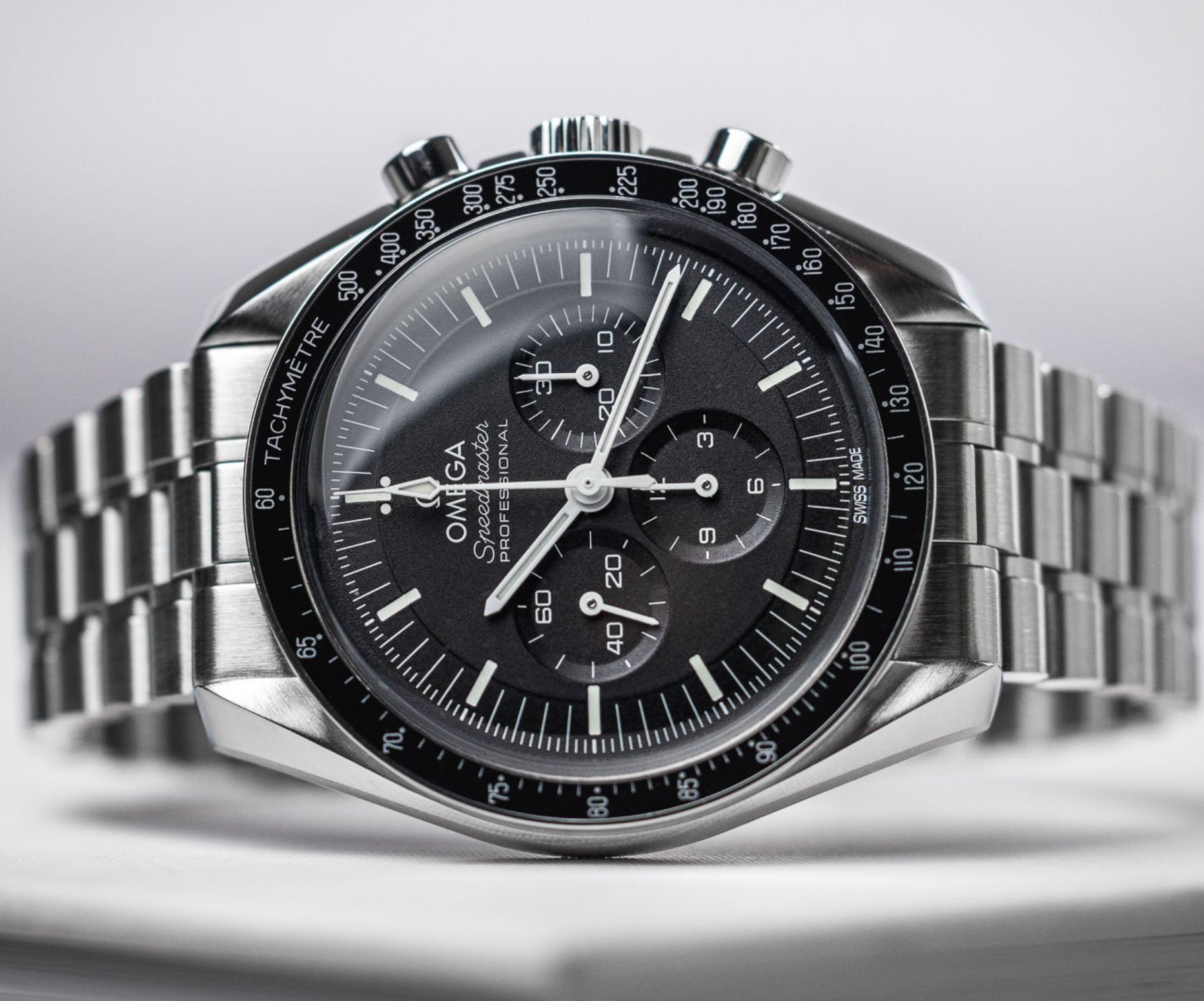
The Omega Speedmaster Professional Moonwatch reference 310.30.42.50.01.001 is familiar at first glance, but many of the details that distinguish it from the previous generation only become apparent on closer inspection. The stepped dial, revised case profile, narrower bracelet and Calibre 3861 make this more than a minor update to an established design.For readers following Omega replica watches in the UK, this reference is particularly useful because it shows why judging a Speedmaster by its black dial and tachymeter bezel alone is not enough. The proportions, crystal, bracelet, dial construction and movement architecture all contribute to the identity of the current Moonwatch.This article looks at those details without relying on personal ownership or wear claims. Genuine Omega specifications are discussed separately from the characteristics that may appear on replica versions.

What Changed With the Current Speedmaster Moonwatch
Omega introduced the current generation of the stainless-steel Speedmaster Professional in 2021. The overall formula remained deliberately familiar: a 42 mm steel chronograph, black dial, tachymeter bezel and manually wound movement.The meaningful changes are found in the details.The dial returned to a stepped construction, the chronograph seconds hand was reshaped, and the aluminium bezel once again incorporated the familiar Dot Over Ninety detail. Omega also revised the case to draw more closely from the proportions associated with fourth-generation Speedmaster references of the 1960s.None of these changes transforms the Moonwatch into a completely different watch. Together, however, they give the current model a noticeably more vintage-influenced character than its immediate predecessor.
Hesalite and Sapphire Are More Than Crystal Choices
Reference 310.30.42.50.01.001 is the Hesalite version of the current steel Moonwatch. Omega also offers the closely related reference 310.30.42.50.01.002 with sapphire crystal.The distinction is not limited to what covers the dial.The Hesalite model uses a solid caseback and printed Omega logo on the dial, giving it a more traditional appearance. The sapphire version adds a transparent caseback that exposes the movement and uses an applied Omega logo. Bracelet finishing also differs between the two versions.Both are powered by the manually wound Calibre 3861, so the choice between them is largely about appearance, materials and how closely the owner wants the modern watch to echo earlier Moonwatch design.For replica comparisons, this distinction matters. A watch should not simply be labelled a sapphire or Hesalite Moonwatch because of the front crystal. The correct Omega Speedmaster Moonwatch caseback and dial details should correspond with the reference being represented.
Why the Hesalite Version Still Looks Different
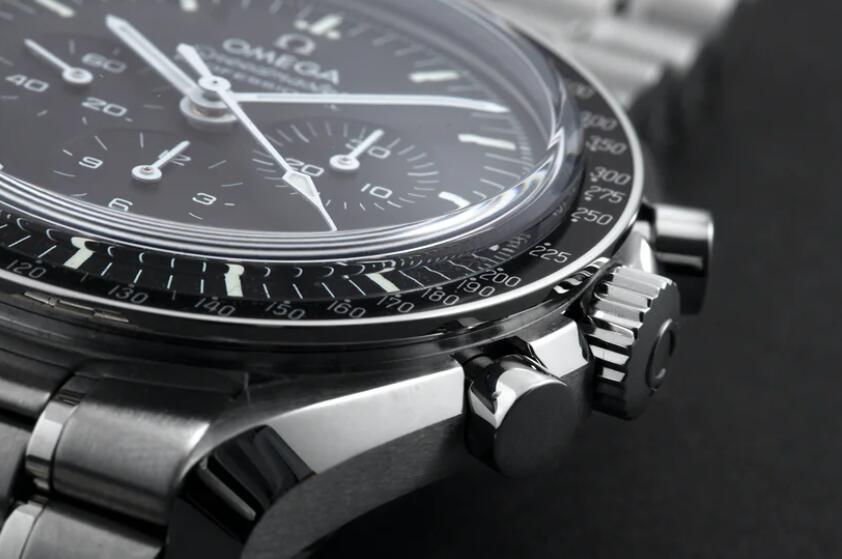
Hesalite has been part of the Moonwatch story for decades. As an acrylic material, it behaves differently from sapphire and gives the dial a slightly warmer visual character, particularly around the curved edge of the crystal.It is also more susceptible to fine surface marks during normal use. That does not make it an inferior material; it is simply one of the compromises that comes with choosing the more historically influenced version.Sapphire offers substantially greater resistance to everyday scratches and provides a clearer view through the crystal. The visual effect, however, is different.This is the sort of detail that is often lost when replica listings reduce the choice to broad labels such as “AAA” or “1:1”. Those terms reveal very little about whether the shape and optical character of the crystal actually resemble the intended reference.
The Step Dial Is One of the Details Worth Checking
The step dial is an important part of the current Moonwatch design. Instead of the dial appearing as one completely flat surface, the outer minute track is visually separated from the central dial area.It is a small detail, but it changes the way the dial catches light and helps connect the modern Moonwatch with earlier Speedmasters.The subdials deserve similar attention. Their depth, spacing, printing and relationship with the central pinion are much more useful comparison points than simply checking whether three counters are present.For anyone examining an Omega Speedmaster 3861 replica dial, useful questions include whether the step is clearly formed, whether the tachymeter and minute printing is sharp, and whether the subdials sit at convincing depths.
The Dot Over Ninety Bezel Is Small but Recognisable
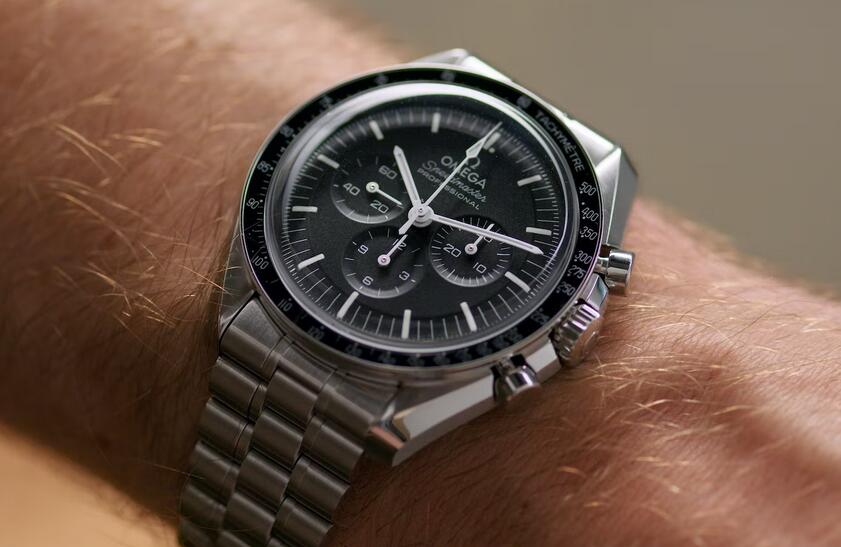
Omega also returned to the historically familiar Dot Over Ninety arrangement on the tachymeter bezel.The phrase refers to the position of the dot associated with the number 90 on the scale. On the current Moonwatch, it sits above the number rather than beside it.This may sound insignificant, but Speedmaster design is built around details that have changed gradually across generations. For collectors and readers comparing different references, bezel typography and dot placement provide useful clues about which design a watch is attempting to reproduce.A convincing Omega Speedmaster Moonwatch replica bezel therefore depends on more than having white numbers against a black background. Font weight, spacing, scale alignment and the Dot Over Ninety position all contribute to the result.
The Case Returns to Earlier Speedmaster Proportions
The current Moonwatch retains the familiar asymmetrical 42 mm case format, but its profile was revised when this generation appeared.The inspiration comes from the fourth-generation Speedmaster Professional case used during the 1960s. The twisted lugs remain immediately recognisable, but the relationship between the case body, lugs and bracelet feels more refined than on the preceding generation.This is an area where measurements tell only part of the story.Two watches can both be described as 42 mm and still look very different because of lug curvature, case thickness, bezel diameter and the way the bracelet meets the case.That makes Speedmaster Moonwatch case proportions and twisted lug shape particularly useful when examining replica interpretations of reference 310.30.42.50.01.001.
The Bracelet Is a Major Part of the Update
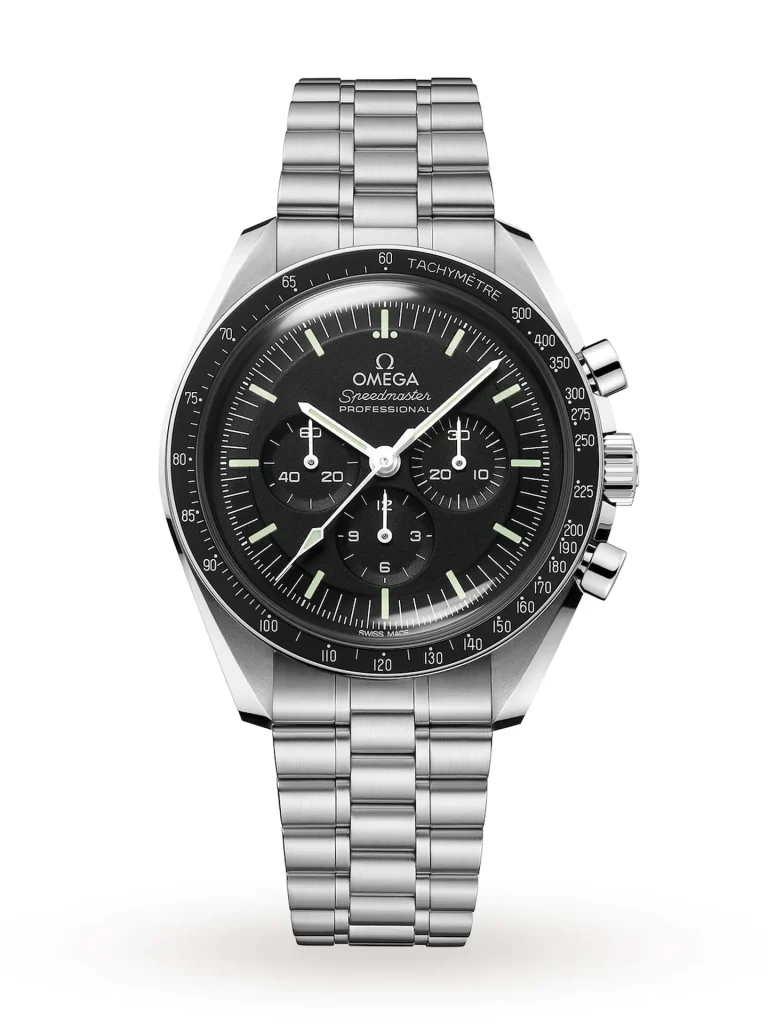
The bracelet was one of the most visible changes introduced with the current generation.It has a stronger vintage influence than the bracelet fitted to the previous Moonwatch, with smaller links and a more pronounced taper towards the clasp. This gives the watch a lighter visual appearance around the wrist even though the case remains substantial.Bracelet construction is also one of the easiest areas in which a replica can look noticeably different from the genuine design.The width of individual links, articulation between them, end-link fit, taper and clasp proportions all matter. A bracelet that appears too wide or too rigid can alter the character of the entire watch even when the dial itself is reasonably accurate.Readers can find more model-specific coverage in our Omega Speedmaster replica watches section.
Calibre 3861 and What Replica Buyers Should Understand
The genuine current Moonwatch is powered by Omega’s manually wound Co-Axial Master Chronometer Calibre 3861. Omega continues to use the movement throughout the modern Moonwatch family, and the calibre represents an important technical distinction between this generation and earlier Speedmaster Professionals.Omega’s current Speedmaster material confirms that Calibre 3861 remains central to the modern Moonwatch range and carries Master Chronometer certification. :contentReference[oaicite:1]{index=1}This is where replica terminology needs to be treated carefully.A replica movement may be decorated or arranged to visually resemble a genuine Omega calibre, but visual similarity does not establish that it shares the same construction, certification, materials or performance.Claims such as “Swiss movement”, “1:1 calibre” or “same as genuine” should therefore not be accepted without evidence.A more useful comparison asks whether the movement is manual or automatic, how the chronograph operates, how the subdials are driven and whether the visible architecture is actually related to the genuine reference.
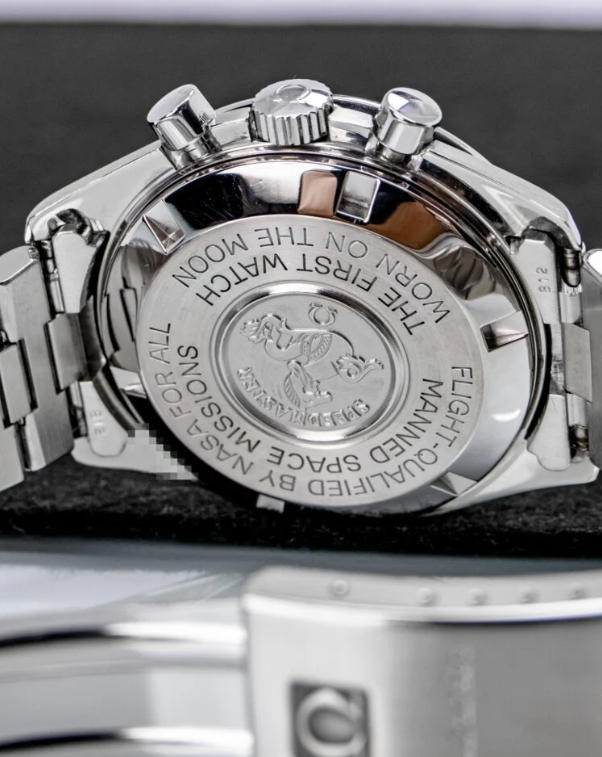
Reference 310.30.42.50.01.001 Versus 310.30.42.50.01.002
The two principal black-dial steel Moonwatch references can easily be confused because they share the same general design.
The simplest distinction is:
- 310.30.42.50.01.001 uses a Hesalite front crystal and solid caseback.
- 310.30.42.50.01.002 uses sapphire and provides a view of Calibre 3861 through the caseback.
There are also differences in dial-logo treatment and bracelet finishing.For someone comparing replicas, establishing which genuine reference the watch is supposed to imitate should therefore come before judging its accuracy. Mixing visual features from the .001 and .002 references is an immediate sign that the design has not been reproduced consistently.
What Matters Most on a Speedmaster Replica
The Moonwatch is difficult to reproduce convincingly precisely because its basic design appears so simple.There are no brightly coloured gemstones or unusually complicated cases to distract from proportion errors. Small deviations become obvious.
The areas worth examining include:
- Case and twisted-lug proportions
- Step-dial depth and printing
- Subdial spacing and position
- Dot Over Ninety bezel layout
- Chronograph seconds hand shape
- Hesalite or sapphire configuration
- Bracelet taper and end-link fit
- Caseback appropriate to the reference
- Movement type and chronograph behaviour
These details provide a far more meaningful basis for comparison than broad quality labels.
Why the Current Moonwatch Still Matters
Reference 310.30.42.50.01.001 succeeds because Omega changed enough to improve the historical character of the watch without turning it into a vintage reproduction.The step dial, Dot Over Ninety bezel, revised case and bracelet all point backwards, while Calibre 3861 brings the mechanical specification into the modern Omega era.For readers interested in replica versions, that combination also creates a demanding benchmark. Getting the name and general dial layout right is comparatively easy. Reproducing the proportions and smaller reference-specific details is where meaningful differences begin to appear.That is ultimately a better way to evaluate a Speedmaster replica than asking whether it is “AAA”, “perfect” or “1:1”. Those terms are marketing descriptions. The watch itself provides far more useful evidence.